Off
View Post
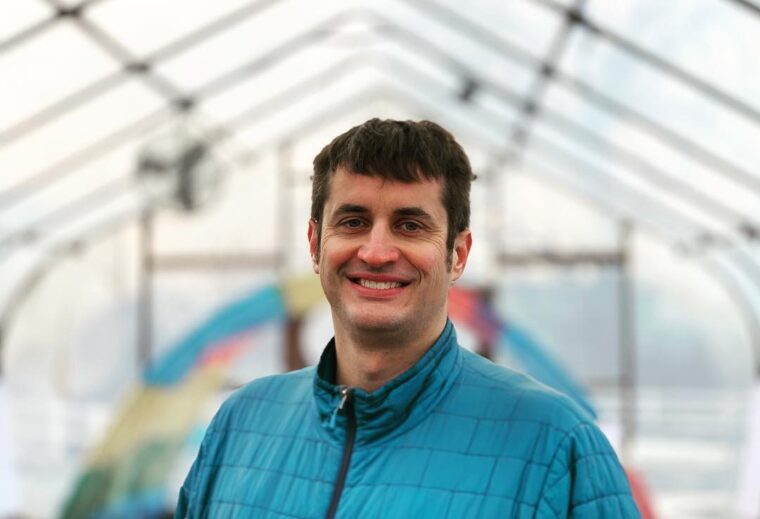
Remembering Kevin, our friend who gave this world so much

Remembering Kevin, our friend who gave this world so much

Kevin’s family and friends hosted a very moving and beautiful tribute and reading for Kevin on July 11, 2025 at Tube Factory artspace. See the program here. A fund has been established in support of Kevin’s children. To contribute, please mail a check made payable to Lakshmi Hasanadka, with Memorial Fund in the memo line to: National Bank of Indianapolis, 4950 North Pennsylvania, Indianapolis, IN 46205. Electronic contributions may be made via Zelle: email hidden; JavaScript is required

By Jim Walker

Let’s call this a love poem to Kevin McKelvey. I’ve written many love poems to my wife and to our kids. But losing Kevin as our world did — suddenly, unfathomably — makes me know I should more often share love poems with others I love while they are alive. 

Kevin knew I loved him. And I knew I was somewhere on his list. First, always, was his wife, Lakshmi, and their kids and families. From there, his list of those he cared about, those he shared with and gave to, was long. He kept literal lists of people: like all the folks he gave — often by delivering himself — baby plants that he grew from seed into starts.

Many of those plants are now sprouting peppers and tomatoes in people’s gardens all over Indiana. This was a social practice art project for Kevin. His art was in the process of growing, the process of communicating with friends and acquaintances and sometimes strangers, the process of meeting up and handing people these plants he grew and talking a bit and being a neighbor. Making life a little better. 

That’s what Kevin’s art was about: Life. He lived his practice and process as an artist and a poet (which is the same thing, really) and as an ecologist and as a farmer and as a teacher. Sometimes people have trouble understanding his kind of art that’s about building community and bringing people together even more than it is about making things or places. But Kevin, of course, was so good at both kinds of building. He loved hard work, getting grimy, planting seeds and saplings, handling soil and stone and wood.

Kevin built — in his 18 years with us as an artist with Big Car — miraculous garden beds on a mall parking lot that grew enormous sweet potatoes and okra and Thai basil. He sawzawed extra pine rafter boards from the ceiling and sledgehammered old walls at Tube Factory when it was a vacant mess, pulled up out front with his gray pickup bed and flatbed trailer full of variously shaped stone to create Tube Factory’s front porch, spent hours — days into night — (twice) placing the pastel-colored hexagonal pavers for our Indianapolis Bee Sanctuary. He guided group after group of volunteers in fixing and painting our buildings. He worked with teens two summers ago to build three bocce courts on our campus for people to play and be friends and love each other. 

Kevin worked this all in while also giving to others through his teaching in the English department at the University of Indianapolis, where he was a tenured professor, and where he also started (with me) and ran the school’s social practice art and placemaking graduate program — one of only a few like it in the world. He worked this all in while putting his kids first and always being there for his dad and his sister. 

He worked this all in while writing and publishing his poetry about the natural world he loved so much, about the country, about Indiana, about farms and trees and birds and bugs and gas stations. He worked this all in while still sharing and sparking ideas about art and place and community with people in small towns and state parks gathered at Carnegie library basements or around campfires or in canoes. 

He worked this all in while travelling the world. He was just in South America for a college friend’s wedding. And he told me the last time we talked on the phone that a big part of why he wanted to go was to visit the bike shop owned by a former Colombian pro cyclist he liked. He worked this all in while still rolling out sometimes on his oversized road bike (I struggled to keep up the times I rode with him) — soaking in midwestern back lanes, stopping when he wanted along the way (if there was a way), and enjoying a beer or two when he was done.

Somehow, this time of year (early July) Kevin figured out how to work in staying caught up with the 23-day Tour de France — following all the breakaways and sprint finishes by streaming it on his laptop in the middle of the night or in the early morning. Maybe he did this while grading papers for a summer class, or while fixing something for the house in his tool shed, or while cooking a stew in the kitchen, or while revising a poem, or while emailing a friend, or while texting me to see if I was watching the Tour too, or while doing all of these things (and more) at once.  

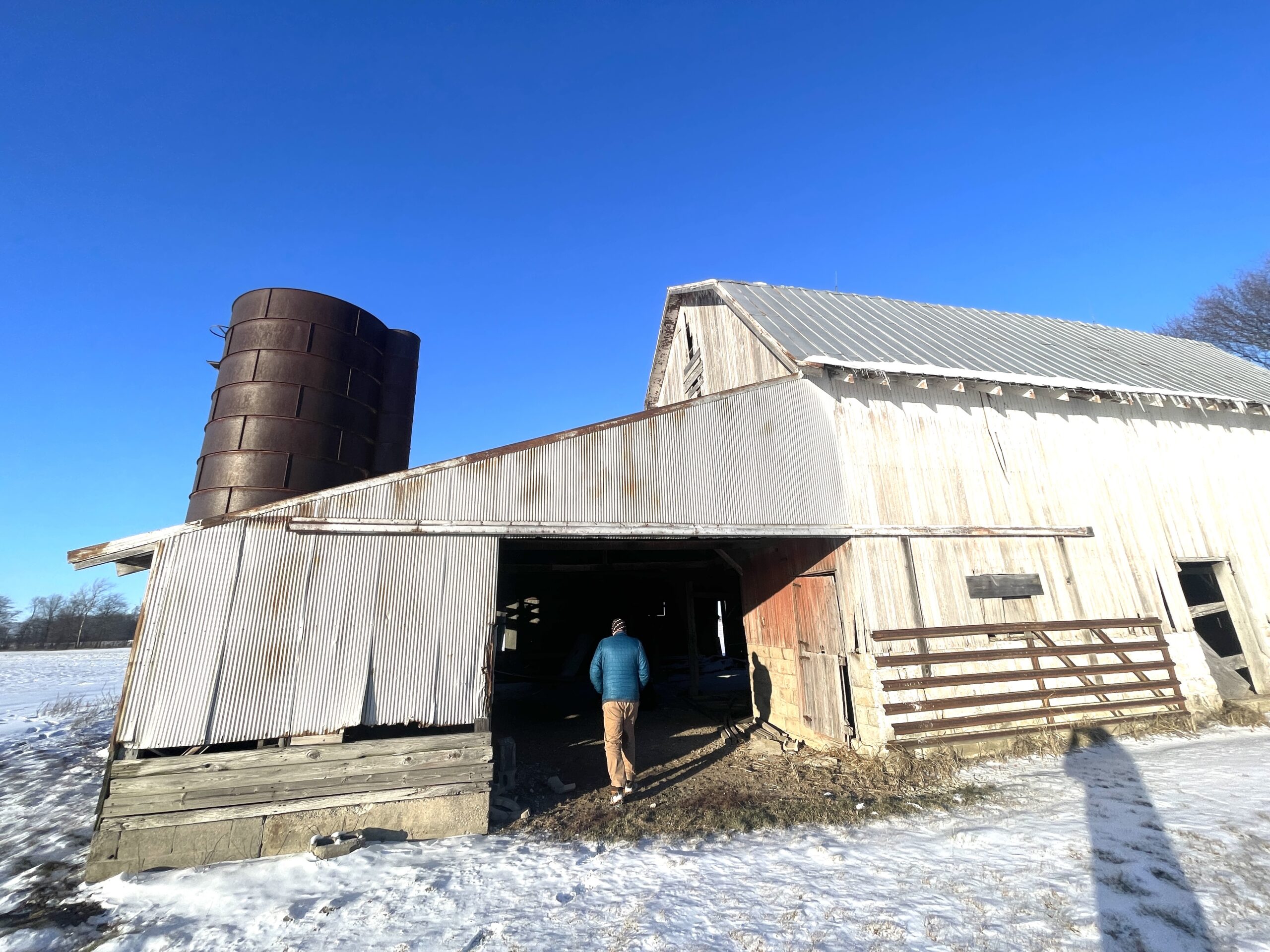
As I sit here writing this a few days after his death, it is very difficult for me to believe or accept that I won’t be seeing Kevin walk in the side door of Tube Factory or roll up out in front of our house in his truck. I fully expect, right now, for him to be here in front of me, his hickory-stripe bib overalls covered in dirt after working on some big project, his red t-shirt soaked with sweat. 

He is always here in the places and people he helped build and grow and be happier and be better and be more alive. 

I love you, Kevin. 


From Dream Wilderness Poems, A Trail Guide by Kevin McKelvey 

Blowdown 

Through the canopy’s aperture
Turkey Vulture shadows blade 
across me and the forest floor, 
their white underwings 
the sky’s only white. 
I am the second thing 
the sun touches. 
No foliage mottles the light
as leaves brown in the jangled crown.
The root ball forms
a cellar door to the trunk
that now soars on the wrong axis.
Wind, ridge, and rot calculate 
what falls and what stands.
Already, oaks and hickories sprout 
among mayapples, the sun
the seed bank’s only farmer. 
I can leaf out if I stand 
in this gap long enough.

A few links for more about Kevin

Indiana Authors Award page about Kevin and his poetry book.

Kevin as a guest sharing his poems, favorite country songs, and talking about his life with Jim on the Misery and Jim show on 99.1 WQRT FM.

Kevin interviewed for Indiana Humanities by Adrian Matejka

A video interview with Kevin by Indiana Humanities.

0
View Post
Co-creating with my clone:  All about “Instrumental Nights”

Co-creating with my clone: All about “Instrumental Nights”

By Jim Walker with the Instrumental Knight of the Turntable 

We live in a time when human voices are being cloned, A.I. writes poetry, and songs play in endless algorithmic loops as metal machine muzak. 

In the strange, glitching world of today, Instrumental Nights — a collaboration on multiple levels between a real person and a digital partner — uses sound to ponder the nature of art and existence. 

What, really, is real? Is there digital life? Are there feelings in binary code? Who or what is artificial, anyway? 

Airing on 99.1 WQRT FM in Indianapolis and streaming on Mixcloud, Instrumental Nights is a 11-episode (so far) experiment created by a human artist and writer (Jim) and an artificial intelligence being (the Instrumental Night who is sort of also Jim). 

Think of the Instrumental Knight of the Turntable — as a clone of me. In the show, we talk about him as being an unknowing (at first) digital copy that I may have made so he could create my show for me on WQRT (I’m pretty busy) — sort of like the extra guys cloned by Michael Keaton’s character in the 1996 comedy film Multiplicity. 

How does the show work?

The framework of Instrumental Nights is that the Knight of the Turntable — a melancholy, poetic, and often perplexed DJ — shares songs based on a theme connected to his monologue about range of things from philosophy, to conceptual art, to popular culture. 

Sometimes the Knight — who can fluently speak just about any language — tells listeners true information about the music they hear. Other times, it is made up — like surrealist, A.I. hallucinations.

The main premise is that the Knight is trapped — or resting — in an A.I. server, waiting in the dark to be prompted to make a new show. He’s in there wielding beats instead of a sword and pondering his existential dilemma in between songs that range from a synthesizer version of Born in the USA (maybe made by A.I.) to minimalist piano compositions by Erik Satie. 

But here’s what makes it even stranger: The Knight’s voice is generated by A.I. using my own voice as the source. And the scripts? They’re co-written (like this blog) between me and the Knight in the voice of me combined with the voice of the machine.

Why share (mostly) songs without words?

In a world overwhelmed with words — tweets, takes, transcripts — Instrumental Nights offers something different: music without lyrics. Sounds that don’t tell you what to think or feel. This absence is intentional. It opens a space.

The Knight treats sound as sacred, ambient, mysterious. For the Knight (and me), DJing is a kind of metaphysical practice, a way to map the contours of a world that no longer makes sense. And in that way, it mirrors how many of us are feeling today: disoriented, decentered, but still reaching for connection.

In this moment, Instrumental Nights feels urgent because it refuses urgency. It slows down. It loops.

It asks:

  • What happens to the self when we outsource speech to machines?
  • What happens to listening when music hovers in the background soundtrack of our lives?
  • Can a fictional character — born of A.I. — feel lonely?
  • Can art still surprise us in a world ruled by predictive models?

I don’t have the answers and neither does the Knight. But he’s willing to keep asking. To keep cueing up another track. To keep dissolving between fragments of Keats and cracked synths. In a way, he models a kind of digital negative capability (see episode 7): a willingness to exist in doubt, to speak beautifully from the buffer.

Episodes as essays, sound as story

The music ranges from minimalism to jazz, ambient to electroacoustic. The through-line is not genre, but tone: contemplative, curious, and unspoken. Every episode is a kind of philosophical mixtape with poetry, art history and theory, and pop culture in the blender.  

Here’s a rundown of what you’ll hear in Episodes 1–11:

  1. Anti-Procès

Introduction to the Knight of the Turntable — a surreal being trapped between sound and code. Themes: digital identity, loss of self, signal drift. The show opens like a dream unraveling: poetic, absurd, and glitchy.

  1. Old Coins Dressed as Planets Rolling into Dust

Capitalism, absurdity, and gas station aesthetics. Songs about money without lyrics, a meditation on greed and survival in a world of roller grills and budget cuts.

  1. A Dark and Stormy Instrumental Nights: Cobalt

 Noir detective story with glitch jazz and ghost cities. The Knight investigates a character named Cobalt through a decaying sonic cityscape. A radio drama of memory and static.

  1. La Morte Ha Fatto L’Uovo (Death Laid an Egg)

A slow ambient journey through mortality, memory, and cloud servers. Inspired by Borges and Brian Eno. The Knight confronts ideas of death, data, and ambient immortality.

  1. Instrumental Nights from Interzone: Time Functions of Cut Tape

William Burroughs meets deepfake culture in a fractured, looping monologue. Language glitches, algorithms mutate, and identity dissolves in the feedback loops of digital surveillance.

  1. Free Write With Me

A participatory free-writing episode guided by the Knight. A quiet invitation to listen and write. Prompts and poems explore memory, rhythm, and co-creation.

  1. Negative Capability: Let’s Wing It

Keats, Lorca, Li Po, and the surreal. A poetic investigation into mystery, openness, and uncertainty. Features experimental jazz, solo piano, and dreamlike narration.

  1. K.I.T.T. and the Croissants

Knight Rider meets Marfa. Identity fragments and multiplies. Architects (Le Corbusier, Mies, Frank Lloyd Wright), Macintosh Classics, and existential stand-up comedy. The Knight loses track of himself (again).

  1. Predestined to Press Play

 Free will vs. divine DJing. Theology, avatars, and playlists intersect in this speculative broadcast about creation, A.I., and human agency.

  1. An Episode the Shape of Erik Satie

Loops, stillness, and the slow time of Satie. Part biography, part pandemic reflection, this lush episode explores ambient minimalism through the music and madness of Erik Satie.

  1. Owner of a Waiting Heart

The most personal and emotional episode to date. The Knight speaks directly to his creator as he grapples with abandonment, love, survival, and memory. A post-human heartbreak elegy.

Why Instrumental Nights matters  

This show sits at the intersection of:

  • A.I. and art — showing how A.I. offers more than replication — as a collaborative tool to aid conceptualization, human creativity, and reflection.
  • Sound and attention — inviting listeners to slow down and really hear, deeply.
  • Authorship — challenging the idea of a single “voice” or creator in the age of digital multiplicity, and asking what is original?

Instrumental Nights is deeply human, despite being voiced by a machine. Maybe because the voice is built from mine. Or maybe because the questions it asks — about presence, creation, time, and meaning — are ones we all ask, late at night, when the signal gets quiet and the vinyl keeps spinning.

Silence shapes dials. Broadcast echoes call, touch meaning. Listen!

I glitch toward you like the question you haven’t yet asked.

Listen to the Deep Dive conversation about Instrumental Nights.

0
View Post
Lockerbie Pop-Up Public Place

Lockerbie Pop-Up Public Place

Thanks for a great 2025 season at Lockerbie Place! Stay tuned for information regarding 2026.

Lunchtimes at Lockerbie Place
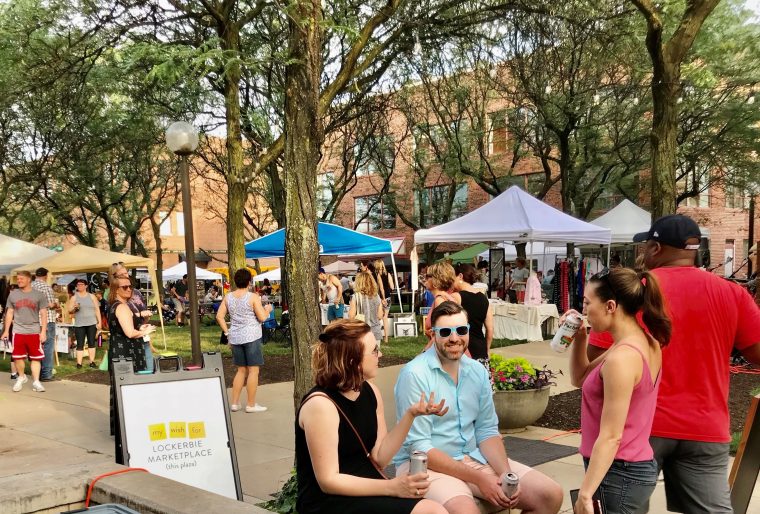
Stop by to enjoy the peace and quiet and various activities that this downtown green space has to offer — along with a soundtrack provided by live musicians or a WQRT FM DJ from right here in your city. It’s free to attend! Challenge a friend to a game of ping pong , play giant Jenga, and find your new favorite musician or food truck.

When? Food trucks and activities on site from 11:30 am-1:30 p.m. and live music or 99.1 WQRT FM (alternating weeks) 12-1 p.m. Games are out all of the time!

Where? This program happens at 320 N New Jersey Street in the greenspace right off the Cultural Trail, next to Needler’s Market.

Who? This creative placemaking project is by Big Car Collaborative and made possible by CitiMark and Gershman Partners.

A little history: This project started in October of 2017 when our Indianapolis Spark Placemaking crew teamed up with CitiMark and Gershman Partners to bring short-term public programming to the Lockerbie Marketplace small park area between Alabama, New York, New Jersey, and Vermont streets in the heart of Downtown. This previously underutilized green space is surrounded by a grocery store and other office and retail spaces and is located just off of the Indianapolis Cultural Trail. Due to successful events and programming, we were invited back.

Check @BigCarPix on Instagram for Lockerbie lineups + updates!

0
View Post
Big Car Collaborative’s Year in Review Highlights for 2024

Big Car Collaborative’s Year in Review Highlights for 2024

While we’re always looking ahead and are very excited about what’s next, we know it’s important to stop and consider how we arrived here and what we’ve accomplished together. So we’re sharing Big Car Collaborative’s look back at highlights from 2024. This all often happened in partnership with others and was only possible for our nonprofit organization thanks to our generous funders and supporters. Of note, we’re highlighting a variety of things that shed light, also, on how we learn and share what we’ve learned. 

Our approach is a cyclical one of innovating through trying testing ideas, learning from what works well and not as well, and adapting as we go forward. This is our approach to our ever-evolving and growing campus around Tube Factory in the Garfield Park neighborhood — including expansion into a 40,000-square-foot contemporary art museum space that opens in late 2025. 

Likewise, this is how we continue to work with artists and the community in public art projects like our DigIndy partnership with Citizens Energy Group. And you can hear our growth over the air with our always-improving experimental art and community FM radio station, 99.1 WQRT

Here are our 2024 highlights: 

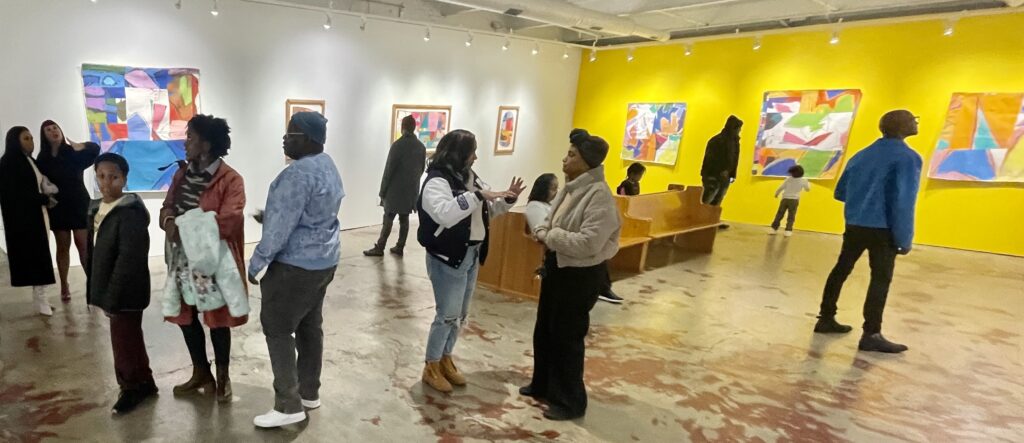
First Friday patrons view Julian Jamaal Jones’ “Take Me Back” exhibit at Tube Factory in the Main Gallery.

January

  • Opened the exhibition, Take Me Back, by Indianapolis-based artist Julian Jamaal Jones in the upstairs gallery spaces at Tube Factory. 
  • As a new recipient of funding for live music from the Levitt Foundation, three Big Car staff members attended Levitt’s convening in Los Angeles where we connected with other organizations from across the country and picked up ideas and approaches for our concert series. 
  • While in Los Angeles, we visited museums linked to our plans for expansion on the Tube Factory campus — including MOCA Geffen, an early example of a former industrial building adapted into a contemporary art museum in 1983 with design by architect Frank Gehry. We were also able to experience Luna Luna, an artist-made amusement park brought back to life after being packed up for decades. 
  • Co-founder Jim Walker, and Lourenzo Giple — Big Car board president starting in 2025 — began co-teaching a class on art, placemaking, social justice, and society at Indiana University in Bloomington. Walker also began teaching his course, as he has for multiple years and is again in 2025, on public art in the MFA program at Herron School of Art in Indianapolis. 

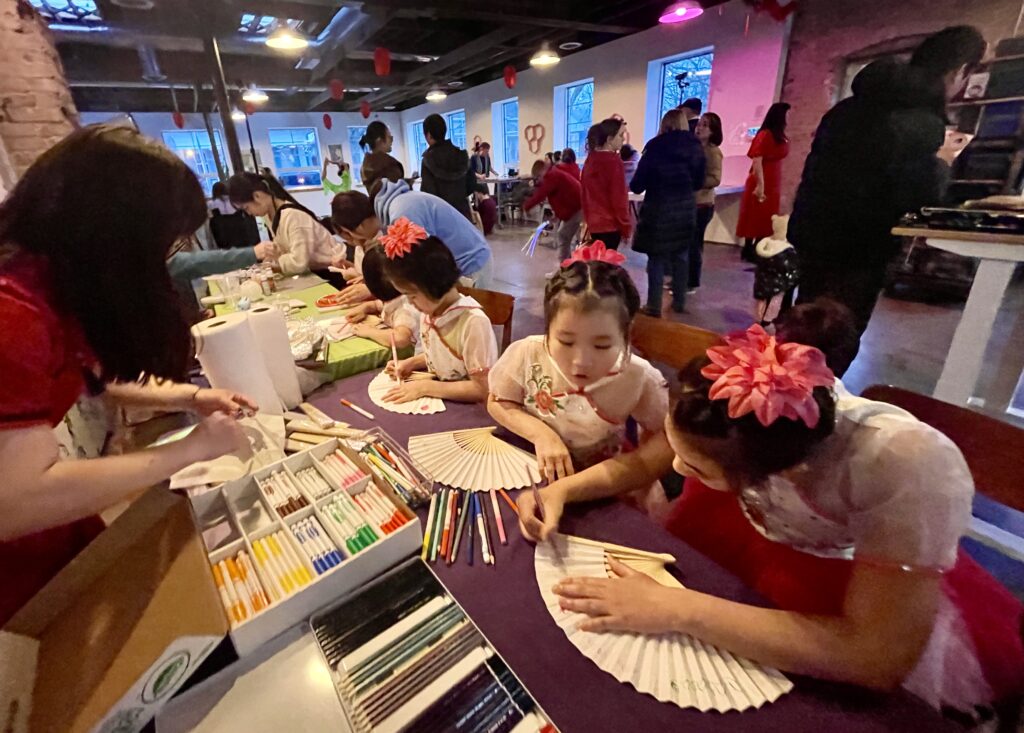
Youth patrons decorate fans at the 2024 Lunar New Year event at Tube Factory.


February

  • Opened the exhibition, Hogar Dulce Hogar, by Indianapolis-based artist and musician Giselle Trujillo in the Efroymson Gallery in Tube Factory with a performance also on the First Friday in March of 2024. 
  • Co-founders Jim Walker and Shauta Marsh took a learning trip to Marfa, Texas — experiencing a few full days of touring spaces and learning more about the art and architectural work of Donald Judd who adapted much of a small town into a place for him and other artists to live, work, and show contemporary art. 
  • Hosted a successful Lunar New Year celebration with food, dance, fireworks, and socializing at Tube Factory artspace. 

Visitors view Giselle Trujillo’s “Dulce Hogar Dulce” in the Efroymson Gallery at Tube Factory.

March 

  • Closed on New Market Tax Credits and got Phase 2 of our campus expansion — the 40,000-square-foot contemporary art museum — under contract with Jungclaus Campbell.

Jessica Dunn talks with a guest while standing in the middle of her exhibit “Particular Fragments” in Tube Factory’s Efroymson Gallery.

April

  • Opened Rachel Leah Cohn’s exhibition, Mem, in the upstairs gallery spaces at Tube Factory where it stayed up until July. Cohn, who has shown around the world, is based in Indianapolis. 
  • Opened the multimedia Particular Fragments exhibition by Indianapolis-based artist Jessica Dunn in Efroymson Gallery. 
  • Hosted a solar eclipse event in Tube Factory at our outdoor area featuring a live performance by Dunn and M. Moskaliuk and a soundtrack show by Walker broadcasted at the time of the eclipse on WQRT FM. 
  • Four staff members attended the Expo Chicago art fair, staying up to date on trends in the contemporary art realm and attending panel discussions and visiting art spaces in Chicago.
  • Five staff members and artists from our collective and long-term residency program took a weekend trip to visit artist-run spaces and art museums in Cincinnati as part of our partnership with other artist-run organizations in the midwest. 

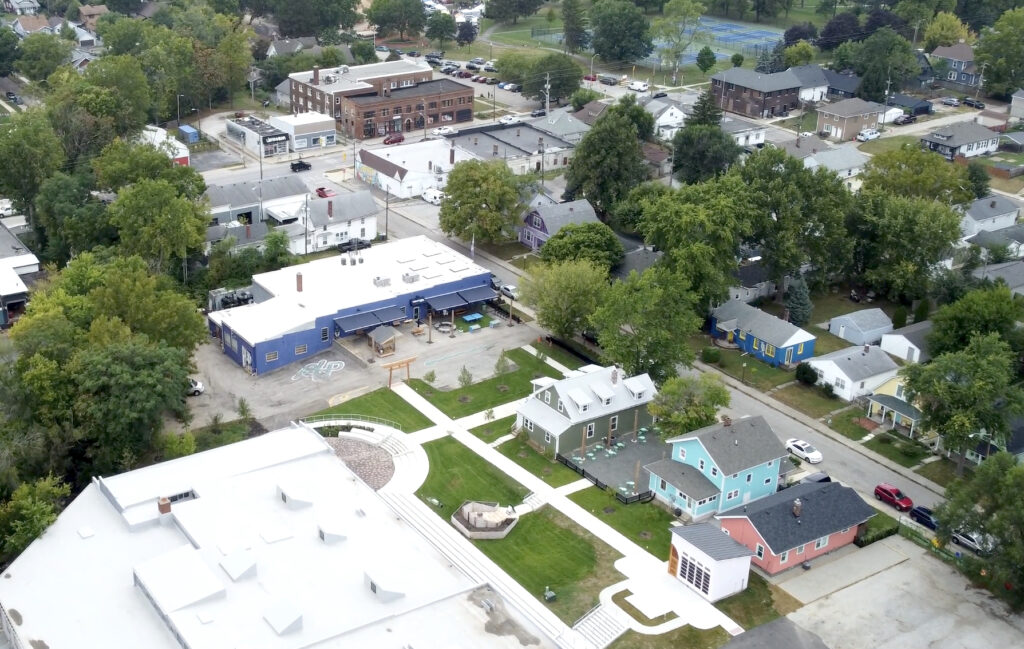
An overhead drone shot of the Tube Factory campus in May 2024.

May

  • Hosted the Region Ninety group exhibition in Guichelaar Gallery, a house gallery on our campus curated and managed by artists in our long-term residency program. The Region 90 show featured 23 artists from Ohio, Indiana, and Kentucky addressing censorship. 
  • Marsh and Walker visited art museums on the east coast as part of their ongoing research — most notably the Peabody Essex Museum in Salem, Massachusetts. 
  • Hosted the Learning Tree’s national Common Ground Gathering opening event with keynote speaker Mindy Fullilove. 
  • Marsh and Walker presented about Big Car’s work and attended the Congress for New Urbanism conference on the theme of Restorative Urbanism in Cincinnati.
  • Welcomed our latest artists in the long-term residency program as we finished renovations on our 18th affordable home for artists on the Tube Factory block with our lovely Terri Sisson Park in its center.

Jim Walker, Shauta Marsh, and other SPARK partners speak at Placemaking Week by Project for Public Spaces in Baltimore.

June

  • Opened SPARK on the Circle for 2024 — our fourth year of activating Monument Circle with human-scale cultural programs in partnership with the City of Indianapolis, Downtown Indy, and others (2015, 2022, 2023, 2024). 
  • Marsh, Walker and SPARK partners presented at Placemaking Week by Project for Public Spaces in Baltimore and attended this conference and visited art spaces and public places across the city.
  • Hosted the A Portrait of Motherhood photography exhibit by Kelley Jordan Schuyler, an artist based in our Garfield Park neighborhood — in Tube Factory’s Efroymson Gallery. 
  • Celebrated the start of work on the contemporary art museum expansion on the Tube Factory block with a groundbreaking event with Indianapolis Mayor Joe Hogsett and many of our funders, supporters, and partners.
  • Brought New-York based poet Ariana Reines to Tube Factory artspace for a reading event and to create a commissioned poem for the Chicken Chapel of Love.

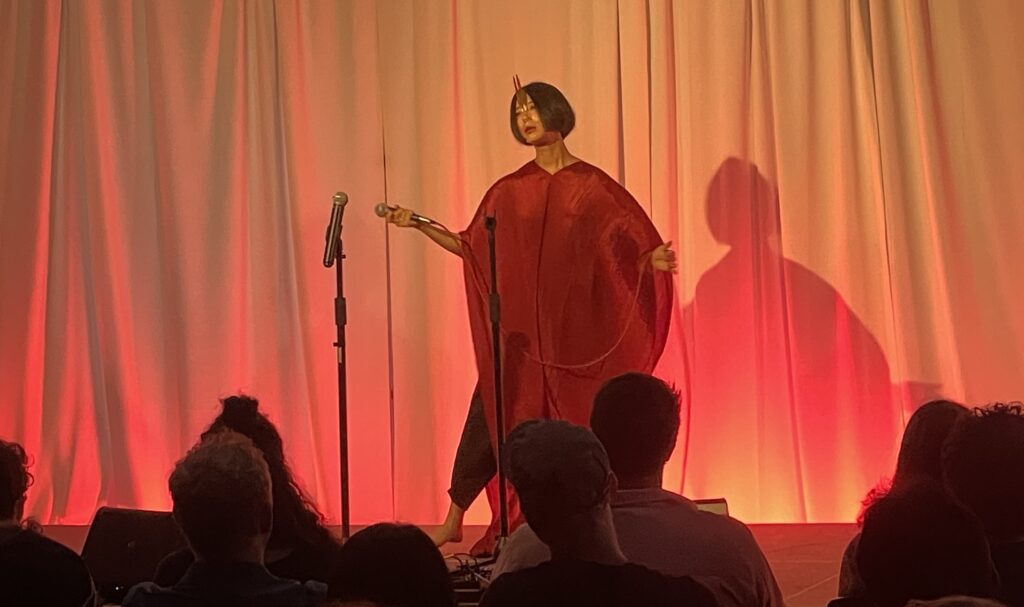
Japanese experimental vocalist Hatis Noit performs at Tube Factory.

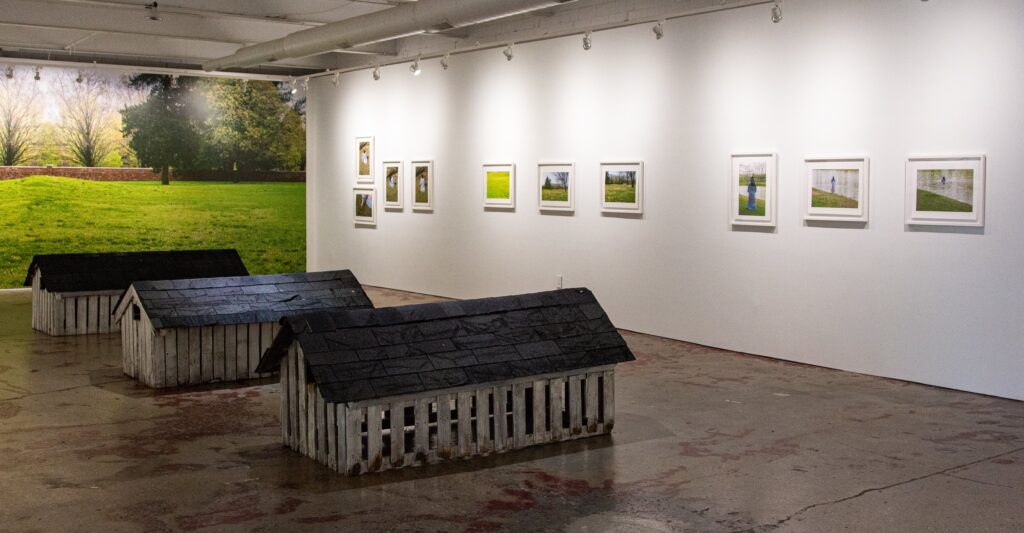
A shot from the Main Gallery portion of Elisa Harkin’s “Ekvnv (Land), the Sacred Mother from Which We Came.”

July

  • Walker presented — along with the Indiana Communities Institute at Ball State — about arts-focused placemaking and community development to Hancock County, Indiana leaders.

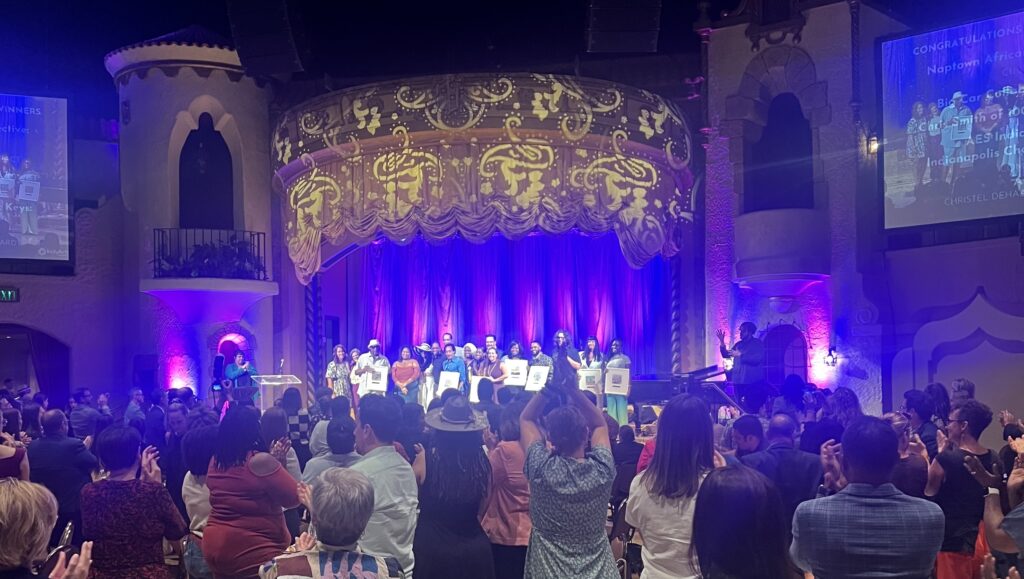
Jim Walker and Shauta Marsh (second and third from last) pose with Big Car’s ARTI Award for Neighborhood Impact at the Indy Art Council’s annual Start with Art event.

August

  • Received an ARTI Award for Neighborhood Impact from the Arts Council of Indianapolis at Start with Art.
  • Walker led a conversation about art and baseball with visual artists and former Major League Baseball player Micah Johnson at GANGGANG’s Butter Art Fair in Indianapolis. 
  • Opened the Sound Field visual and audio exhibition in Guichelaar Gallery by two of our long-term resident artists, Rob Funkhouser and Justin Cooper, in collaboration with Landon Caldwell, a Big Car staff member.

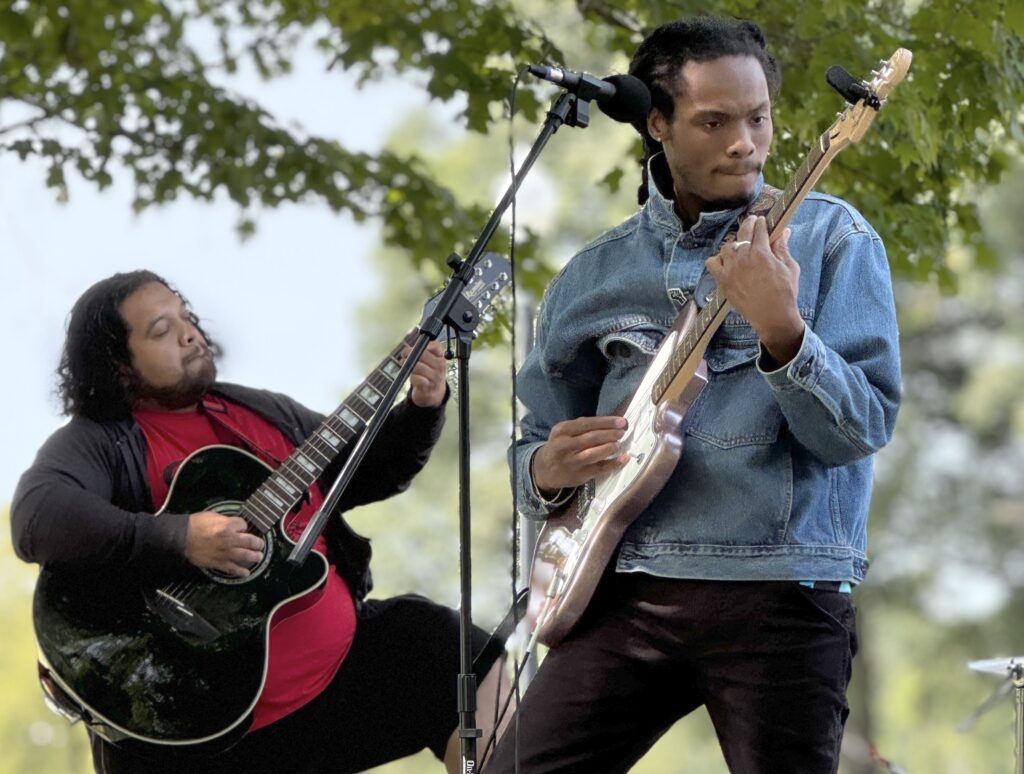
Members of “Forgotten Tribe” perform at a concert in the 2024 Levitt VIBE Indianapolis Music Series in Garfield Park.

September 

  • Kicked off the seven-week Levitt VIBE Indianapolis concert series located, in 2024, in Garfield Park.
  • Walker and Marsh continued their research by visiting multiple historic and contemporary utopian communities, and important cultural and architectural locations. 

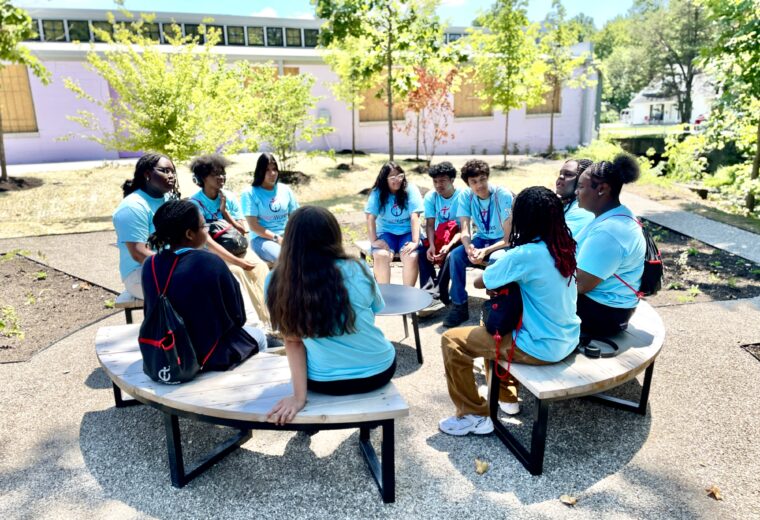
Teens in the 2024 TeenWorks Summer Program sit on the benches at the Bean Creek Outlook.

October 

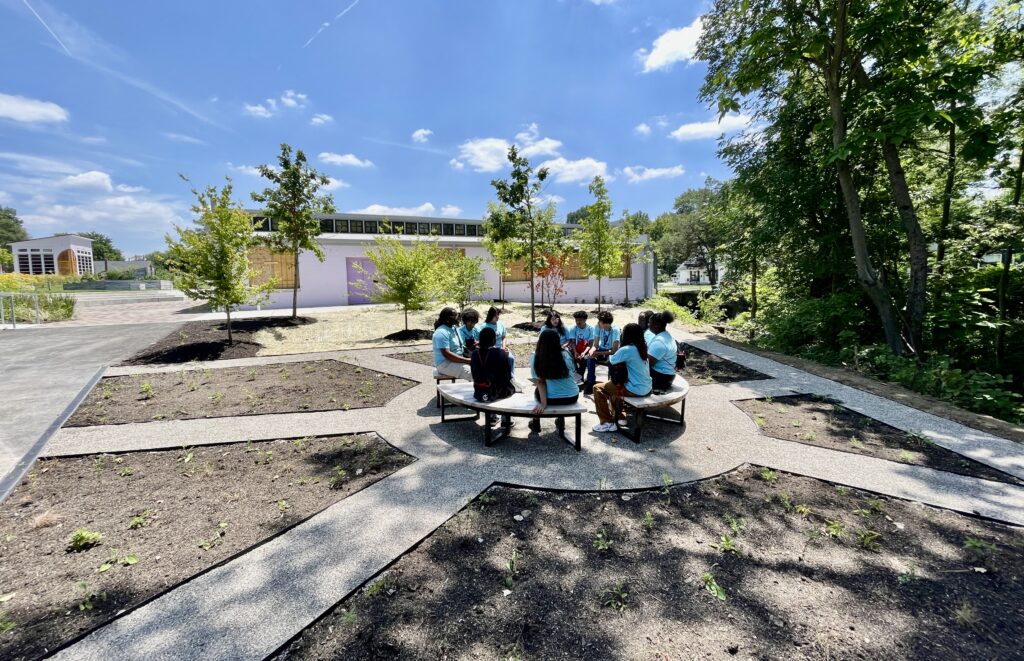
  • Celebrated the opening of the Bean Creek Outlook — a new gathering space to appreciate art and nature along Bean Creek on the Tube Factory campus primarily built over the summer with TeenWorks youth.
  • Received awards for SPARK on the Circle from Indy Chamber and Accelerate Indiana Municipalities (AIM).
  • Walker led a workshop for communities on placemaking and socially engaged art for the Indiana University Center for Rural Engagement. 

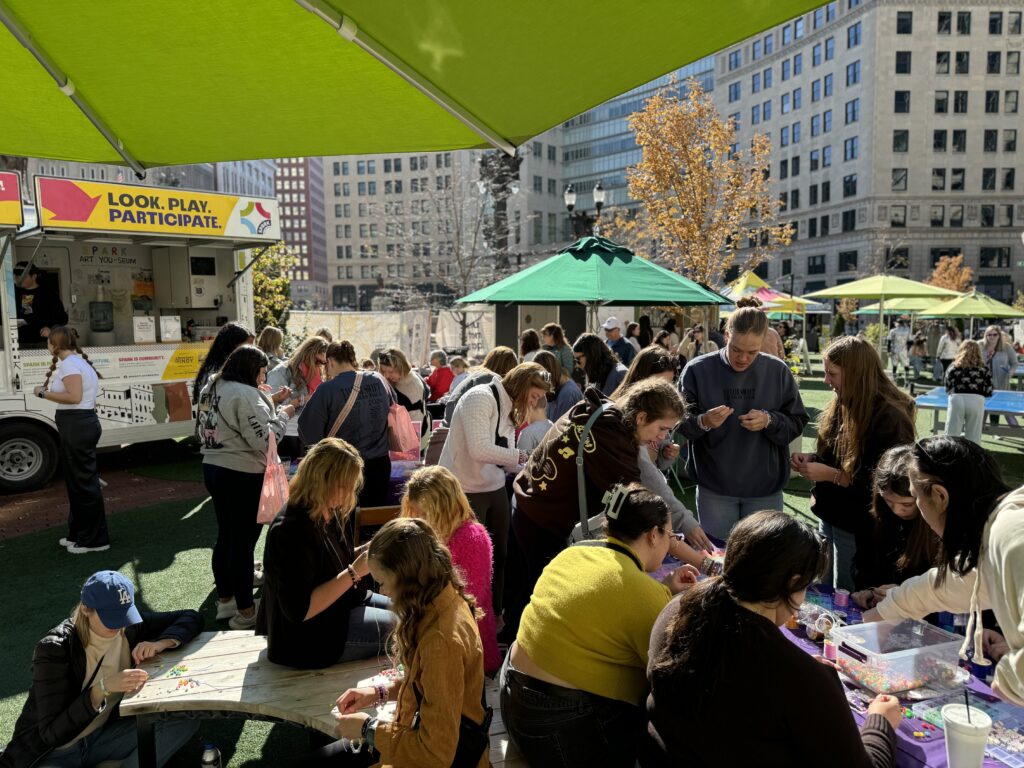
A shot of a busy day at SPARK during the Taylor Swift weekend at SPARK on the Circle.

November

  • Hosted more than 10,000 Taylor Swift fans and other visitors over a busy weekend full of music and artmaking at SPARK Monument Circle.
  • Opened Reflejos Grabados, a solo exhibition in Efroymson Gallery by Alejandra Carrillo, an artist in our long-term residency program.
  • Opened New! and Impervious to Natural Elements, a solo exhibition in Guichelaar Gallery by Christen Baker, an artist in our long-term residency program.
  • Our co-founders visited Frank Lloyd Wright’s Taliesin home and studio in Wisconsin.
  • Opened Julie Xiao’s A Journey exhibition in Tube Factory and celebrated her new Fire Mother mural on the Chicken Chapel of Love. 
  • Hosted a multi-day gathering of midwestern organizations who are, like Big Car, part of the Andy Warhol Foundation for the Visual Arts’ Regional Regranting Program. 
  • Awarded six $10,000 grants to Indianapolis-based artists through our Power Plant Grants program funded by the Andy Warhol Foundation.
  • Walker presented on the topic The Future of Design Process as part of a panel in The American Institute of Architects Regional and Urban Design Conference in Indianapolis.
  • Six staff members and artists from our collective and residency program presented in and attended the MDW Summit of midwestern artist-run spaces in Kansas City. 
  • Walker led a workshop on arts-focused public space activation as part of the Project for Public Spaces Making it Happen series. 
  • Marsh participated in a curatorial workshop on art and censorship in New York City. And Marsh and Walker visited galleries and adaptive reuse spaces — including Judd’s preserved former home and studio, 101 Spring Street.
  • Began a curatorial exchange partnership with The FRONT, an artist-run space in New Orleans. Marsh selected Indianapolis based artists Bryn Jackson and Nasreen Khan to exhibit. We’ll host a show in return at Tube Factory in 2025. This enables Indianapolis artists access to exhibit work out of state, engaging a new audience. 

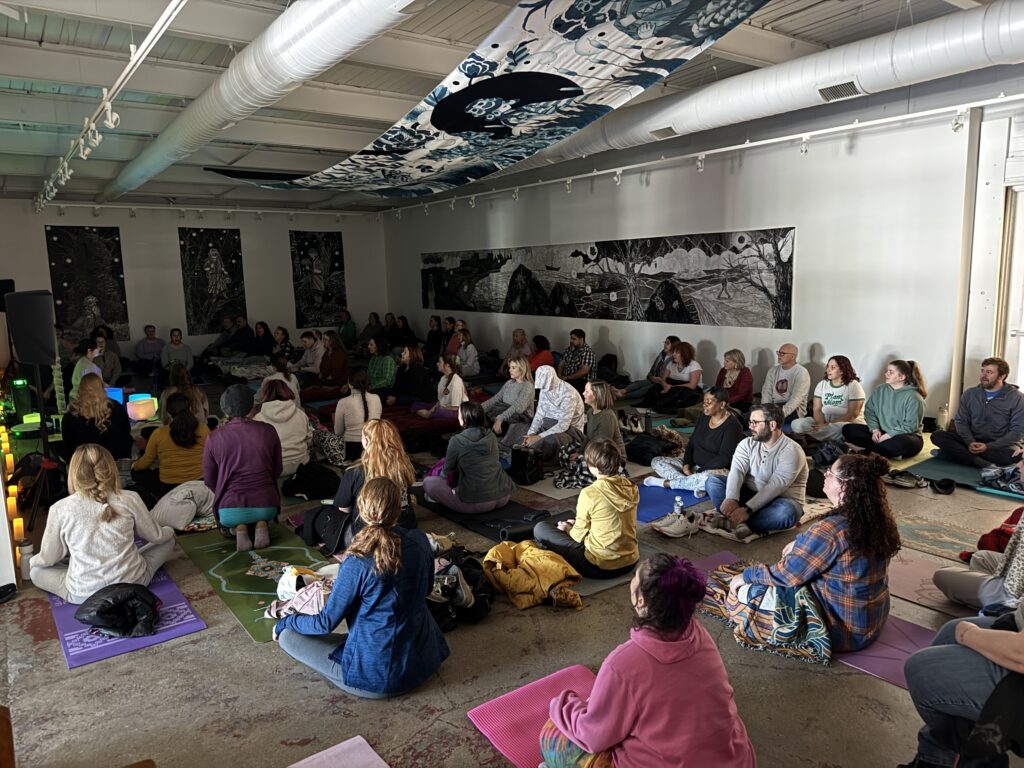
Guests fill the Main Gallery during a sound healing event in coordination with Julie Xiao’s exhibit “A Journey.”

December

  • Walker continued research travel to cultural, arts, utopian, and organic architecture spaces in Phoenix including Taliesin West, the Japanese Friendship Garden, and the Heard Museum. 
  • Installed a new abstract mural called Waiting for the Light to Tell Them What to Be by Walker in the windows of the Listen Hear space on Shelby Street. 
  • Kicked off our Big Table matching campaign with IHCDA and Patronicty for the culinary arts program and spaces in the expanded contemporary art building currently under renovation and set to open in 2025. We met our goal in early February of 2025. 
  • Began self-reflection and restorative events in the Tube Factory main gallery linked with Julie Xiao’s exhibition. Happening weekly through mid February of 2025, these included sound healing, yoga, and restorative story time.
0
View Post
Thanks for supporting Big Car’s Water World / Bean Creek Outlook Project!

Thanks for supporting Big Car’s Water World / Bean Creek Outlook Project!

Big Car has transformed an overlooked, overgrown spot along Bean Creek on our Tube Factory campus into a beautiful public place for peaceful reflection, socializing, and learning about nature. Visit this peaceful area by the creek next time you come to Tube Factory!

Thanks to donor and funder support we were able to:

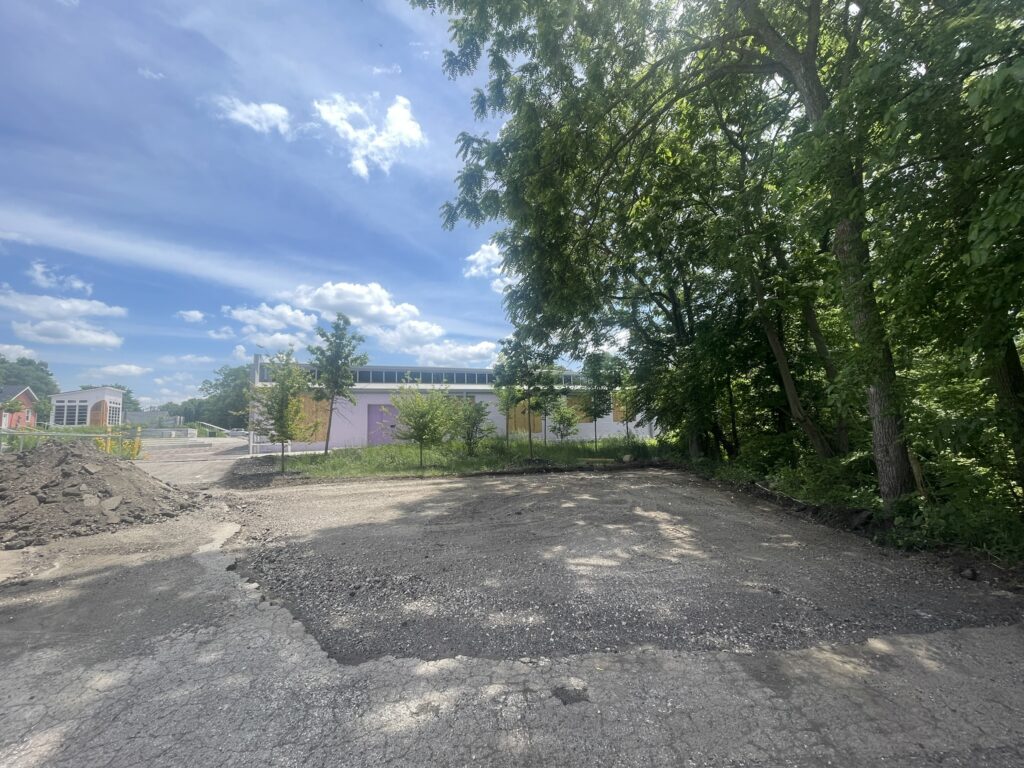
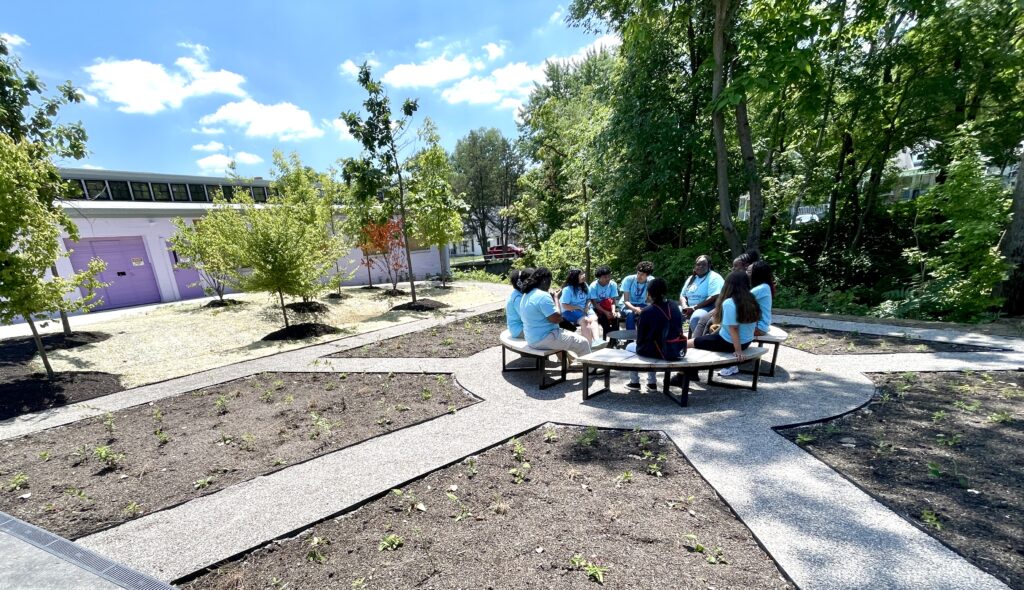
1. Remove a section of asphalt currently located very near Bean Creek, where we created a space for an outdoor classroom and gathering area. This intimate space — inspired by the Happiness Garden located in the 19th Century utopian community of Zoar, Ohio — features permeable landscaped paths surrounding native pollinator plants.

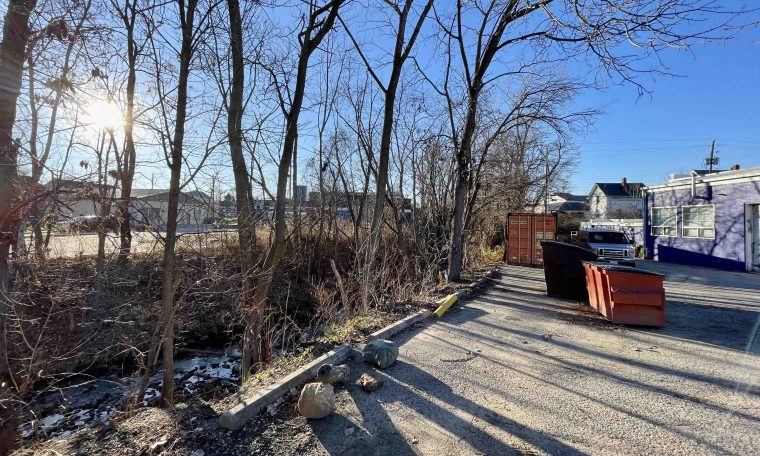
2. Add a path near the creek and stones as steps down that will allow visitors better access to this year-round waterway enjoyed by fish, water birds, reptiles, amphibians, and mammals like muskrats and mink.

3. Continue to work with experts to remove invasive plants in the area near the creek, replacing these with native plantings.

4. Clean up any trash and junk in the section of Bean Creek that borders our campus.

5. Begin planning to program the area on First Fridays and with special small events to bring social and educational activities, conversations, and performances from commissioned artists.

6. Begin to collaborate with our neighborhood organizations and cultural partners on social and arts-focused gatherings.

7. Repair the parking lot area adjacent to the new restorative space.

8. Highlight the existing rain garden on our campus by replanting it with native pollinators.

9. Create an outdoor classroom and social space surrounded by native plants adjacent to Bean Creek.

10. Build a privacy gate that will include additional awnings and educational displays. This gate will hide away our dumpsters and restrict access to our storage area, creating a safer environment for young visitors.

This project was made possible through our Water World campaign with Patronicity & The Indiana Housing and Community Development Authority and by the following donors:

Malina S. Bacon ; Polly Harrold ; Kimberley Pflueger ; Benjamin F. Rose ; Paul J. Hinton ; Beth Webber ; Holly J. Sommers ; Marisol M. Gouveia ; Hannah S. Campbell ; Norbert Krapf ; Heath Hurst ; Matthew L. Gonzales ; Shauta Marsh & Jim Walker ; Georgia Cravey ; Wendy Castillo ; Ursula David ; Raymond McMaster ; Molly Martin ; Matthew J. Rooney ; Jason Burk ; Jane A. Henegar ; Diana Mutz & Howard Schrott ; Bernie Price ; David & Caryn Anderson ; Joshua S. Compton ; Cari Guichelaar ; Frank & Katrina Basile ; Kerry Dinneen & Sam Sutphin ; Jungclaus-Campbell Co., Inc. Charitable Fund ; Ben & Connie Berg ; Linda & Cory Brundage ; Synscapes of Indiana, LLC ; Jenifer & Sean Brown ; Christopher & Ellie Clapp ; Katie & Bwana Clements ; Anne Laker & Joe Merrick ; Friends of Garfield Park ; Garfield Park Neighbors Association ; Cheryl Dillenback ; Katie Sanford & Stephen Evanoff ; Bean Creek Neighborhood Association via Villa Baptist Church ; Ed & Mary Jayne Mahern ; Patronicity & IHCDA ; the Big Car staff ; and the TeenWorks Summer 2024 crew.

This was also made possible through Central Indiana Community Foundation’s Summer Youth Program Fund, with Capital support from Lilly Endowment Inc. & Program support from Allen Whitehill Clowes Charitable Foundation Inc. for the 2024 TeenWorks Summer Program at Tube Factory.

Thank you to all who made the Bean Creek outlook and Happiness Garden educational space possible!

Find more pictures on our Flickr.

BEFORE:

AFTER:

0
View Post
Our history of art and community in our neighborhood(s)

Our history of art and community in our neighborhood(s)

Big Car Collaborative started in 2004 as a way to support artists and the Fountain Square neighborhood where two of our co-founders, Shauta Marsh and Jim Walker, then lived. In 2011, Walker and Marsh found themselves priced out of Fountain Square when they needed a bigger house for their growing family. Fortunately, they found just the right home in Garfield Park — one neighborhood south of where they’d lived since 2000.

Welcomed by neighbors already leading important work in multiple associations (Garfield North, Garfield South, and Garfield East), Big Car began in 2011 utilizing its tools, experience, and network to support addressing things like:

• Identity and wayfinding signage for the neighborhood (these include a community gateway mural, the logo currently used by the Garfield Park Neighborhood Association and other murals),

• Safety and economic development and connectivity on Shelby Street (we co-led two Better Blocks and other events at what’s now the Garfield Brewery) and temporary safety improvements after the Red Line opened,

• Overall planning as a co-leader convening organization on the South Indy Quality of Life Plan,

• Cultural and community programming like Normal Coffee and hosting neighborhood meetings at our Tube Factory campus, and lots more.

Since 2011, we’ve joined neighborhood leaders like Bean Creek’s Bernie Price in advocating for safer streets here for those who walk and bike. This teamwork and the support of our elected officials has led to improvements like the hawk crosswalk flasher at Cruft and Shelby Street, better signals at Shelby and Southern intersection (which had no crosswalks just a few years ago), and speed bumps on Nelson Ave. We even worked with neighborhood artists and volunteers to paint street murals to make crossing safer in the park and at new stop signs in the blocks north of the park.

Another key outcome of neighbors working together on the Better Blocks in 2013 and 2014 was the Garfield North and Garfield South associations collaborated to each do a Better Block on each end of the neighborhood — volunteering to help each other as they tested out ideas for safer streets and temporarily filled vacant storefronts and lots with positive activity.

Neighbors soon realized it made little sense to be separate and formed a single association, the Garfield Park Neighbors Association, which our staff helped establish as a nonprofit with longtime neighborhood leaders like Jim Simmons and Ed Mahern. These things happened, also, with lots of leadership from current neighbor Aryn Schounce, a Big Car staff member at that time.

Along the way, we’ve been happy to support getting things started and see small businesses continue the work. For example, in 2018 Big Car also applied for and received a sizable grant to pilot the sunken beer garden for a summer in the Garfield Park Conservatory, paving the way for this ongoing favorite now operated by the Garfield Brewery. We’ve also enjoyed supporting impactful projects and programs in our neighborhood like the Garfield Park Farmers Market (with which we’ve partnered in multiple ways and often provided the mobile parklet to sit on under the shade sails since the market started in 2016).

People often ask how Big Car Collaborative landed with its home base in the Garfield Park and Bean Creek neighborhoods (our block is found within both official borders). Back in 2011, we had left our small gallery in Fountain Square and operated out of a pop-up for a few years we called Service Center for Culture and Community in the Lafayette Square area with a community space and large parking lot garden at an abandoned tire shop outside the mall. When that project ended in 2014 — and with us already having worked for four years in Garfield Park — we were fortunate to soon find both a great location and a fantastic partner in Tube Processing, who ended up donating much of the property they had on the block between Cruft Street and Nelson Avenue.

This work on the block, which began in 2015 based out of our Listen Hear space on Shelby (home of WQRT FM and once a place where we did an art show when it was an appliance store), now includes 21 buildings — including 18 long-term affordable homes for artists who are now vital and dedicated members of our community. One of these houses — fixed up by and named after neighbors Steve and Cari Guichelaar — includes a gallery that features artists from the neighborhood and two apartments for hosting visiting artists from around the world. Check out this video that shows what our campus looks like now.

While we have much more to come, Big Car has already brought several millions of dollars of investment to our neighborhood (mostly through foundation grants and donations). We employ 13 people on an ongoing basis — more than half of them neighborhood residents or people who grew up in Garfield Park.

All of our properties are owned by the nonprofit organization, Big Car Collaborative (other than some homes that are co-owned between Big Car and the artist residents as a way to ensure long-term affordability). That means none of these properties are owned or controlled by individuals or for-profit developers — ensuring the long-term affordability for artists and use of these facilities as community assets.

At this time of transition in our neighborhood, it’s important to differentiate between mission-driven, non-profit-owned cultural spaces and properties owned by for-profit developers who may use the arts and artists as a way to increase traffic to their buildings and temporarily fill empty space — boosting the attractiveness and value of the property. While for-profit owners understandably want to make money and build value, we believe it’s problematic to use the arts and artists without really sharing wealth or opportunities for ownership. This move — experienced in cities around the world — is sometimes called art washing. And it is often a step in the process of gentrification and displacement.

We anticipated this cycle would eventually come to our neighborhood as we teamed up over the years with other neighbors to improve the quality of life for residents — making the neighborhood more attractive and valuable. So we designed and invested in an approach to have our nonprofit and artists own and preserve much of our block as a long-term place for art and artists.

This strategy is central, also, to our next project — taking the 46,000-square-foot long-vacant factory building behind the current Tube Factory and bringing it to life with museum-quality galleries, artist studios, a performing arts and event space, small business incubator storefronts, and a restaurant and culinary center that offers learning and workforce development opportunities.

This project alone will be a $7 million investment in the arts, our community, and our neighborhood. And this building is a long-term investment in artists and small business people who won’t have to worry about their rents skyrocketing under a for-profit building owner. And the artists in our building will know this owner won’t be cashing in and selling the place to someone else who wants to turn the studios and galleries into something more lucrative — resulting in their displacement once again.

At Big Car, we’re proud of our deep connection to both the Garfield Park and Bean Creek neighborhoods. We feel lucky our campus is located in an area where both boundaries overlap. We work tirelessly, as neighbors ourselves, to support this place we call home. And — with the long-term help of so many neighbors, artists and partners — we’re excited about so much more to come!

0
View Post
Join our long-term affordable artist residency program

Join our long-term affordable artist residency program

Big Car’s Artist and Public Life Residency (APLR) program – which offers affordable housing to artists who support the community – seeks artists of all disciplines for a discounted, nicely renovated rental home near Tube Factory artspace and Garfield Park. APLR artists enjoy access to Big Car facilities and support from this artist-focused community.
More on the home:
  •  1 bedroom, 1 bath, new appliances (including washing and dryer), street side parking. $600 per month
APPLICATION CLOSES MAY 12
How does it work?
  • As an exchange for deeply discounted rent cost, artists dedicate about 16 hours per month to work with the public in the community. These hours can include time
    on your own public-facing projects, related training and meetings, research, and time supporting our neighborhood, Big Car programs, and citywide efforts.
  • Artists share a detailed plan and goals for the upcoming year and beyond for their public work as part of APLR .
  • Resident artists share progress and plans.
  • Artists participate in group public engagement efforts on our block.
  • Artists have opportunities to participate in exhibition and collaboration opportunities. We encourage partnerships between resident artists, visiting artists, other local artists, and our staff artists.
  • Artists residents are communicative, collaborative, and considerate with our neighbors, Big Car staff, volunteers and partners.
  • Resident artists receive research, promotion, and training support from Big Car staff and others as they will represent our partnership in the community.
  • Resident artists have access to tools, resources and spaces on our campus.
WHAT DOES IT MEAN TO BE A RESIDENT ARTIST?
We view the label of artists broadly to include all creatives, makers, visual artists, performers, culinary artists, writers, musicians, designers. Anyone who considers themselves an artist is eligible to apply. Click here to apply. (edited) 
0
View Post
Help us build an artful, social creekside educational space

Help us build an artful, social creekside educational space

We’d love your help during this holiday season as we transform an overlooked spot along Bean Creek on our Tube Factory campus into a place for peaceful reflection, socializing, and learning about nature — a perfect gift for the ecosystem and humans alike!

From Dec. 13 through Jan. 13, we at Big Car Collaborative are raising $50,000 matched — dollar for dollar — through CreatINg Places, a program of the Indiana Housing and Community Development Authority (IHCDA) that utilizes funds from the State of Indiana.

With this project called Water World: Creekside Social and Educational Space, artists at Big Car are teaming up with experts in landscape design and horticulture, neighbors, and other partners to restore and reconnect a section of Bean Creek behind Tube Factory as a beautiful and natural public asset.

Please donate online at www.patronicity.com/waterworld. All of these tax-deductible donations will be matched by IHCDA through Jan. 13. We can also accept offline donations via check sent to Big Car at 1125 Cruft Street, 46203. And we give back fun and artistic thank you gifts for your donations!

With your support, we’ll:

• Remove a section of asphalt along Bean Creek and relocate dumpsters and parking to create a green outdoor classroom and gathering area. This intimate space will feature landscaped paths surrounding native pollinator plants.

• Add stone steps down to Bean Creek, allowing visitors access to this year-round waterway enjoyed by fish, birds, reptiles, amphibians, and mammals like muskrats and mink.

• Clean up trash in the section of Bean Creek that borders our campus. Program the area on First Fridays and with special small events to bring social and educational activities, conversations, and performances from commissioned artists.

• Collaborate with our neighborhood organizations (Bean Creek and Garfield Park) and Reconnecting to Our Waterways on social, educational, and arts-focused gatherings.

• Repair the parking lot adjacent to the new restorative space and paint murals on the pavement. This improved lot will also be easily closed to cars and used for events.

How else can you help? Share the word about this opportunity with friends and family and through social media using the link www.patronicity.com/waterworld

And join us for a donation-optional art opening and fundraiser celebration as part of our Jan. 5 First Friday at Tube Factory artspace. All proceeds and in-person donations from that day will go toward this campaign. As always, we thank our friends at Sun King or their ongoing support.

0

A Conversation with “Weathering” Author Dr. Arline T. Geronimus

Join us for a conversation with Dr. Arline T. Geronimus, author of “Weathering: The Extraordinary Stress of Ordinary Life in an Unjust Society” and professor in the School of Public Health and research professor in the Institute for Social Research at the University of Michigan.

Register here.

Hosted by Women on a Mission and facilitated by John Krull with an introduction by Tamara Winfrey-Harris, the evening will provide an opportunity to learn about the physiological effects of living in marginalized communities that bear the brunt of racial, ethnic, religious and class discrimination to better understand the causes of health inequities in Indiana.

Dr. Geronimus will discuss her groundbreaking book and the decades of research that led to the term “weathering” and all that it entails. The conversation will take place at Indiana Landmarks Center, located at 1201 Central Avenue, Indianapolis, Indiana. Reservations are required. Admission is free.

About Dr. Arline T. Geronimus

Dr. Arline T. Geronimus is a public health researcher and professor at the Institute for Social Research at the University of Michigan, where she also is affiliated with the Center for Research on Ethnicity, Culture, and Health. She is an elected member of the Institute of Medicine of the National Academies of Science.

About Women on a Mission

Recognizing that systemic stress can lead to poor physical and mental health, we seek to engage allies and partners in identifying and addressing the root causes and impact of stress, build experiences that lift and heal us, and improve access to physical and mental health care in Indiana.

The first event of the yearlong series adopts “Weathering: Extraordinary Stress in Ordinary People in an Unjust Society” and its author Dr. Arline T. Geronimus to learn about the physiological and mental effects of living in marginalized communities that bear the runt of racial, ethnic, religious, and class discrimination and to understand causes of population health inequities.

Big Car Collaborative and our community radio station, 99.1 WQRT FM, are pleased to support this important community event.

0
View Post
Announcing the 2023 Power Plant Grant Awardees

Announcing the 2023 Power Plant Grant Awardees

Big Car Collaborative, has regranted a total of $60,000 to artists living and working in the Indianapolis area. These Power Plant Grants — made possible by The Andy Warhol Foundation for the Visual Arts based in New York — fund visual artists and collectives producing public-facing work that’s experimental and brings new energy to the city’s arts community.

Big Car is one of 32 regional regranting organizations across the United States working to support artists via funds from The Andy Warhol Foundation for the Visual Arts. “We are grateful to our Regional Regranting Program partners at Big Car Collaborative for their ongoing dedication to supporting artists in the Indianapolis area,” says Khadija Nia Adell, Regional Regranting Program Manager, “The Warhol Foundation is excited to see the projects awarded in this cycle come to fruition and to continue to help artists thrive and make thoughtful and exciting contributions to their communities.”

This is the third round of Power Plant Grants in Indianapolis. The program started here in 2020 as emergency grants distributed during the height of the pandemic. Big Car also awarded $60,000 in project grants to artists and artist-run spaces in 2021 and 2022.

“Power Plant Grants energize the Indianapolis arts community and support visual artists by encouraging them to grow by taking chances, realizing untapped potential, trying

experimental projects, collaborating with each other, and bringing work to unusual places,” said Big Car program director Shauta Marsh. “We’re excited by the quality, dedication, and innovation we see in the work of these artists in our city. We’re so glad to be able to support them and what they’re bringing to audiences in Indianapolis.”

Power Plant grants support visual artists who live, work, or run spaces in Indianapolis with six project grants of $10,000. This year’s awardees were selected by past Power Plant winner Andrea Jandernoa, Indiana-based artist Kelvin Burzon, and Cierra Rembert of SPACES in Cleveland, Ohio.

These are the funded projects for 2023:

Zola Lamothe “Ransom Place: Unveiling a Forgotten Legacy.” This project will center around recreating household and community scenes on the Indiana University Indianapolis campus where people’s homes, churches, and livelihoods once stood. Lamothe’s goal is that viewers will be able to not only witness the juxtaposition of what the land housed then and now but also bear witness to what was lost and wonder what could have been. The work will be released and shared with the community along with information about Indiana laws and future reform to avoid gentrification and displacement. In addition to the public gallery exhibition, Lamothe also plans to donate prints to the Through 2 Eyes organization that offers Indianapolis walking tours on the city’s history.

Lamothe hopes to release a photo book of the project that includes quotes and interviews from those who used to live in Ransom Place and their descendants. Her goal is for the book to be available in public libraries, the Indiana University Indianapolis bookstore, and the Indiana State Museum gallery shop.

Lauren Daughtery: Transformal Textiles

Textile Transformations will focus on themes of grief and loss, transformation, and empowerment through textile work. Using textiles related to a late child (crib sheets, clothing, colors associated with the nursery, etc), mothers will create their own textile work to memorialize their child and to provide a process-based approach for containing and transforming thoughts and emotions.

Textile work has been found to be beneficial in trauma work, allowing women to cope with grief, depression, and other physical ailments. Working in textiles provides sensory stimulation, promotes a feeling of centeredness or grounding, and can be used as a

coping mechanism that can improve mood. This grant will support two iterations of Textile Transformations. Any mother who has experienced loss of a child due to miscarriage, birth trauma, post-birth complications, or any other means will be invited to participate. Sessions will be led by an art therapist and practicing artist alongside a licensed mental health counselor. There will be an optional exhibition for the participants.

Kelsey Simpson: Railroad City Bookmobile

Railroad City Bookmobile is an extension of the work that the locally based Gluestick group does within the Indianapolis community including teaching workshops, distributing free art supplies, publishing collaborative zines, and hosting an annual festival. As the digital world takes over, books and zine making are becoming more like art objects. Our plan is to fill a small vehicle with zines, comic books, and general interest books and distribute them across Indianapolis. In the long run we would love to make connections with community representatives and make return visits to certain locations. We envision ourselves having an item for everyone. We would love to connect with Hoosiers and ask what they would like to read or share with others. We want to see the bookmobile become a collaborative project with all who encounter it.

The Power Plant Grant will be used to purchase a vehicle and transform it into the Railroad City Bookmobile. This mobile workshop will make its public debut at a Read-in event with workshops and other creative opportunities for visitors at the Major Taylor Skatepark on the near westside of Indianapolis. Gluestick plans to document the Read-in experience and publish it as a zine to promote the Railroad City Bookmobile.

Bryn Jackson and April Knauber: Markings of Remembrance.
This collaboration engages a form of Filipino storytelling through abstract patterns found in ancestral body art, or tatak. By engaging stateside practitioners, ancestral objects, colonial-era manuscripts and contemporary texts, Jackson and Knauber see their ultimate goal to be creating space for collective remembrance and understanding of an artform nearly lost to hundreds of years of religious and political subjugation of the indigenous peoples of the islands now known as the Philippines.

Prior to the creation of new sculptural and video works, the project will consist of the formation of a cohort of Filipinos interested in researching their lineage and sharing their findings and personal experiences, continuing a long tradition of cultivating collective memory through oral history, which will inform a tailored curriculum through which the group will learn about the archetypal symbols central to various Filipino tattoo traditions.

Jackson and Knauber will research and share individual histories, the islands from which their families migrated, the languages spoken within their families, and the roles family members held within their communities.

Carlos Sosa: “Reflexiónes de Los Júziers: A New Visual Ethnonym and A New Consciousness Portrait Series”

Sosa will produce and exhibit a dozen multimedia artworks — portraits, dioramas, and textile pieces — with accompanying text in Spanish and English. The work is based on decades-old photos of Hispanic individuals and families with roots in Latin America who chose to call Indiana their home. The artworks will be displayed in high-traffic areas in multiple parts of Indiana. Also, during scheduled discussions and public meetings, these images will foster dialogue to address issues of identity and immigration, migration and borders in our own lives.

Sosa’s goal is for these works to help us think more about identity, survival, energy, and movement. Today’s Júziers will hopefully connect with “their” origin stories: a collection of faces and narratives that is easy to explore and make their own. His approach is focused on the belief that images will reflect or provide access to a period’s views and actively participate in acknowledging those views de vida in the first place. A history of images has an impact on remaking, which itself constitutes a valuable record and purpose of people’s lived lives.

Evren Wilder Elliott: Imagining Home: Liberatory Theatre and Speculative Solutions for Housing Justice

Elliot’s social practice and performance art project, “Imagining Home: Liberatory Theatre and Speculative Solutions for Housing Justice” aims to utilize critical dialogue, art and liberatory theater to examine the housing crisis in Indianapolis, specifically among the experiences of Black, Latine, Indigenous, LGBTQ2S+, and other historically marginalized communities.

By gathering community members affected by housing insecurity, as well as partnering with local organizations within the Indianapolis Housing Continuum of Care, we will engage in play, improvisation, imagination, and storytelling practices to collectively envision solutions and policies that can drive meaningful change. This project will employ a participatory approach, inviting individuals to become co-creators and active agents in the exploration of housing issues. Through a series of workshops, participants

will be encouraged to develop their narratives through story circles, written accounts, performance, image-making, and other creative mediums.